Why Carmei Gat? An in-depth first look for English speakers
Carmei Gat has come a long way. Only a few years ago, it barely registered on the radar of English-speaking families looking for a new neighborhood to raise their families or for new olim researching aliyah destinations. Today, it is a name that comes up regularly in the Facebook groups, WhatsApp communities, and aliyah forums. It may not be the first city on everyone’s list, but it is increasingly showing up on people’s top five list. And the families already living here will tell you that the gap between “not sure about it” and “can’t imagine living anywhere else” closed faster than they expected.
If you are at the stage of taking Carmei Gat seriously, or even just starting to consider it, it is important to take an in-depth look at what you would actually be moving to.
What Carmei Gat actually is
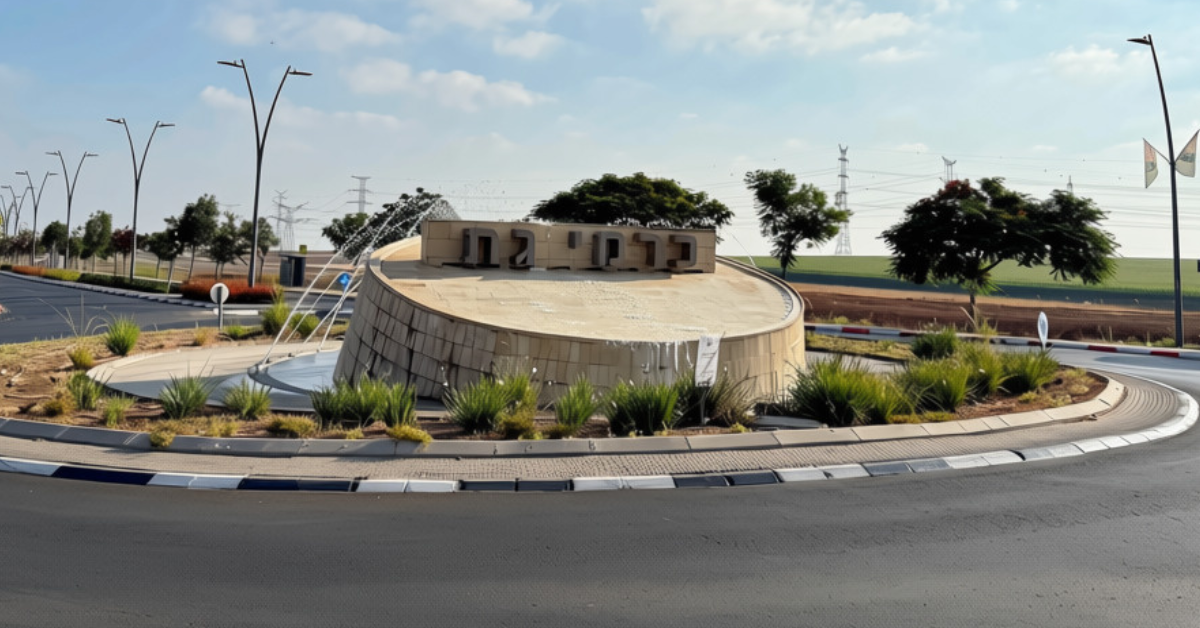
Carmei Gat is a large-scale planned community located in the Judean foothills, roughly equidistant from Tel Aviv, Jerusalem, and Beer Sheva. It is a neighborhood under the municipal jurisdiction of Kiryat Gat, but it has its own distinct identity, infrastructure, and character that sets it apart from the older, more established parts of the city. In fact, it is considered the largest building project in Israel since Modi’in, a distinction that reflects both the scale of what is being built and the level of national investment behind it. It was purpose-built as a planned community rather than developing organically over time, and that intentional design shows in how it feels to live there.
Carmei Gat was designed with families in mind: wide streets, green spaces, a mix of apartment buildings and private homes, and a community infrastructure that was built intentionally rather than accumulated over decades of organic sprawl. For buyers who have visited some of Israel’s older urban centers and wondered where they would actually want to raise children, Carmei Gat tends to feel like an answer.
But here is what is also true: the people who bought early, who chose to be part of something still taking shape, have helped define what this community has become. The schools, the shuls, the social fabric of the place, all of it has been shaped by the families who showed up before everything was ready.
Who is moving to Carmei Gat
The community in Carmei Gat is genuinely mixed, and that mix is worth understanding because it shapes what kind of place it is to live in.
A significant portion of residents are Israeli families, many of them young couples looking for affordable options outside of the cities where they grew up, places like Givat Shmuel, Modi’in, or Ra’anana. They were looking for somewhere they could afford a real home without giving up the kind of community they had in mind. Others have come from local kibbutzim and smaller towns in the area, giving the community a grounded, locally rooted quality that newer development areas sometimes lack.
Alongside them are English-speaking families who have made aliyah from the United States, the United Kingdom, Canada, South Africa and Australia, some recently, some years ago. They are visible in the community, active in shuls and schools and neighborhood life, and in many ways they have been part of building the social infrastructure of the place.
While Carmei Gat has a strong Anglo community, the community’s primary character is Israeli. English-speaking families integrate into that. Their children go to Israeli schools, join Israeli youth movements, and grow up bilingual in a way that children in more insular communities often don’t.
What this mix produces in practice is a community where Shabbat feels like Shabbat. Families are outside. Children move between houses. The street has a social life that many residents, particularly those coming from larger cities say they did not fully anticipate.
The community also has a multigenerational quality that is relatively unusual for a city of its age. Many families followed their married children to be close to the next generation. This is not a city of transient renters waiting to move somewhere better. The people who come tend to stay, and that stability shapes the kind of community it is.
What the community offers
The community has multiple schools across the religious and secular spectrum, from public secular options to private religious institutions, with ulpan and absorption support for children arriving from abroad. Youth movements, including Bnei Akiva, give children and teenagers a social structure outside school that plugs them into the wider Israeli community. There is a diverse range of shuls including Dati Leumi, Chabad, and many Sephardic shuls. With an established commercial and shopping infrastructure, plus additional services and malls in Kiryat Gat in close proximity, Carmei Gat offers all the essentials for day-to-day living.
The Kiryat Gat train station connects the area directly to Tel Aviv and Beer Sheva, making it genuinely livable for people whose work or family ties mean they need to move around the country. The Intel campus in Kiryat Gat is one of the largest employers in the region, and the surrounding tech corridor is growing. Remote work has also made the area’s location less of a compromise than it might have seemed a few years ago.
On a practical level, Carmei Gat is a genuinely pleasant place to move through day to day. The streets are wider than in most Israeli cities. There is real green space, including parks and public areas that get used, not just designated on a plan and left empty. The mix of apartment buildings and private homes means that the neighborhood does not have the uniform high-rise density of some newer Israeli developments. For families coming from suburban environments in North America or the UK, the scale and feel of the place is often more familiar and comfortable than they expected Israel to be.
The physical space also affects the social life in practical ways. When streets are walkable and parks are nearby, children play outside. When families live in buildings rather than sprawling subdivisions, neighbors become part of daily life rather than people you occasionally pass. Carmei Gat has the kind of physical design that makes community happen naturally rather than requiring everyone to make a deliberate effort to connect. That is worth more than it sounds, particularly for new families arriving without an existing social network.
For families considering the move, the honest question is usually not whether Carmei Gat has what you need. It usually does. The question is whether it feels like your kind of place. And that is harder to answer from a distance, which is part of why it helps to speak to someone who actually lives there.
Is Carmei Gat right for you?
More than 300 English-speaking families have chosen Carmei Gat, and the number continues to grow. They came from the United States, the United Kingdom, Canada, Australia, South Africa, and elsewhere, and they came for different reasons: affordability, community, space, the schools, the Israeli character of the place, or simply the feeling that this was somewhere they could build something real. What they found when they arrived tended to exceed what they had expected.
Carmei Gat offers something that is genuinely hard to find: a community that is Israeli in character and welcoming to English speakers, with the schools, the shuls, the services, and the infrastructure for a full family life, at a price point that allows families to buy a home that actually fits them rather than a compromise. It is equidistant from Tel Aviv, Jerusalem, and Beer Sheva, which means it works for more family situations than its location on the map might suggest. And because it is still growing, the families arriving now are still close enough to the ground floor that their choice of neighborhood and property can genuinely shape their experience.
Families who visit Carmei Gat with an open mind tend to leave with a very different question than the one they arrived with. Not whether they could live there, but how quickly they could make it happen.
A personal note
I made aliyah from Chicago in 2012 with my husband and five children. We built our life first in Maale Adumim, where we raised our children and where I began my career as a realtor. As the children grew older, our lives pulled us increasingly toward Jerusalem, and we lived there for four wonderful years.
When our married children began searching for homes of their own, they found Carmei Gat. They were looking for affordability, a genuine community, and a place where they could put down roots and build something. They found all of it here. My husband and I followed, wanting to be close to our grandchildren. What we didn’t expect was how much the move would enhance our own lives independently of that. Here, we were able to afford a beautiful house with a pool, something that would not have been possible in Jerusalem or Tel Aviv at any comparable price. The quality of life is different in ways we continue to notice.
The community here has been good to us, and continues to be good to any newcomers to Carmei Gat.
If you are curious and want to talk through what Carmei Gat looks like for your family specifically, feel free to get in touch.
Contact Deborah for more information about Carmei Gat, rental and purchase opportunities, and community updates.