The most common question families ask when they are seriously considering Carmei Gat is some version of this: but where will my kids go to school?
It is the right question to ask. School and community infrastructure can make or break a family’s experience of moving somewhere new, whether they are arriving from overseas or relocating from another part of Israel. A beautiful apartment in the wrong school district, or a community that doesn’t have the social structures to absorb new families, can turn what should be a fresh start into a prolonged struggle. Families who have done this well consistently say the same thing: they chose the community first and the apartment second.
Carmei Gat has built out a genuine, functioning educational ecosystem. They did not expect such a large influx of olim and they are working on the challenges that come with this. Parents help advocate for their kids and slowly problems get solved. Understanding what exists, what it looks like in practice, and what families with children of different ages can realistically expect to find, is one of the most useful things to get clear before making a decision.
Daycare and early childhood
For families with young children, Carmei Gat offers both public and private daycare options. The availability of subsidized public daycare through the municipality makes the community accessible for families where both parents are working or studying, which describes many young households in the early stages of building their lives here. Private frameworks exist alongside the public options for families who want specific educational approaches or more flexible hours.
This is worth noting because the daycare question is one that catches many families off guard when moving to a new area. In Israel, securing a daycare spot can require advance planning, and for families new to a neighborhood, navigating the registration process takes time. Carmei Gat’s growing population has driven the development of more early childhood infrastructure than a community of its age might otherwise have, which benefits all families arriving with toddlers, whether they are coming from overseas or from another Israeli city. There are special education options also. There are some private english speaking daycares also. All of the centers fill very quickly so you must sign your child up right away once you have your home contract!
Elementary schools
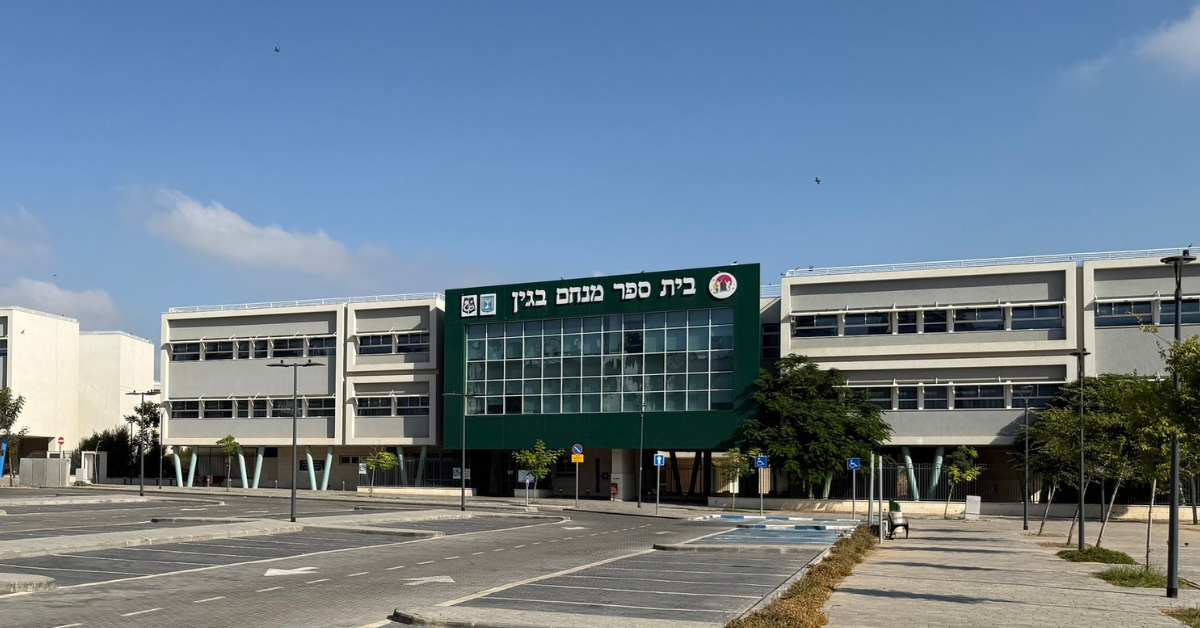
Carmei Gat’s elementary school landscape reflects the range of the community itself. There are currently four local schools serving the elementary age range:
• Menachem Begin, a secular public school
• Shabazi, a public religious school
• Kol Eliyahu, a private religious school
• Rambam, a public religious school
For English-speaking families arriving from abroad, the question of ulpan and absorption support within schools is a practical one. For Israeli families relocating from other cities, the transition is generally smoother on the language front, though finding the right school fit within the religious and secular spectrum is still a meaningful decision. Families in either situation should confirm the current arrangements at the specific school they are considering, as programs evolve and availability can vary from year to year. The schools in Carmei Gat are full quickly. For Dati famillies, you must be flexible in sending your kids to Kol Eliyahu or Shabazi, both good options. Kol Eliyahu has more kids from English speaking families while Shabazi is said to be a bit more progressive and offer a bit more ulpan hours. This could change year to year but this is my understanding of today's situation.
The spread of options between secular and religious frameworks is meaningful for families who are deciding which environment fits their observance level and their goals for their children’s education. This is not a decision to make lightly, and speaking with families who are already navigating it in Carmei Gat is the most useful research available. It tends to be the kind of information that does not live in any brochure.
High schools
As the community has grown, Carmei Gat has developed high school options that mean families do not have to make decisions about secondary education before the time comes. The current high school landscape includes:
• Ulpana, a religious high school for girls
• ORT High School, a public high school
• Gross High School, a religious school for both boys and girls
• Yeshiva Kiryat Gat, serving religious boys
Teens also attend high school in surrounding towns.
The presence of both public and religious high school options means that families with teenagers do not have to plan a secondary move when their children reach that age. This is not a given in smaller or newer communities, and it matters for families thinking about putting down roots for the longer term.
While the number of teens in Carmei Gat has been growing each year, finding the right high school is always a challenge for people making aliyah with older kids. If your child is willing to work on the Hebrew and be patient with fitting in, local options are good. If not, there are options to travel which have worked for kids here.
Youth movements and after-school life
Formal education is only part of the picture for families with children and teenagers. The social infrastructure outside school, the youth movements, after-school activities, and community networks, is often what shapes a child’s sense of belonging more than the school itself.
Bnei Akiva, the Religious Zionist youth movement, is active in Carmei Gat. Shabbat activities, holiday programming, and the social bonds that form through a youth movement are a meaningful part of Jewish communal life.
Beyond the formal youth movement, Carmei Gat has developed a range of after-school activities for children and teenagers. Current offerings include gymnastics, martial arts, swimming, tennis, Padel, a full range of team and individual sports, arts and crafts programs, and private English tutoring. For families arriving from English-speaking countries whose children are navigating the language transition, there is the availability of English tutoring within the community. Many English speakers have also started camps locally during Chaggim and school breaks.
This variety matters. Children who have activities they enjoy and peers they see outside school adapt to a new community faster and more happily than children whose social world is limited to the school day. The after-school infrastructure in Carmei Gat has developed in response to the families who are actually there, which means it reflects what real families with children of different ages and interests actually need.
Shuls and the social fabric
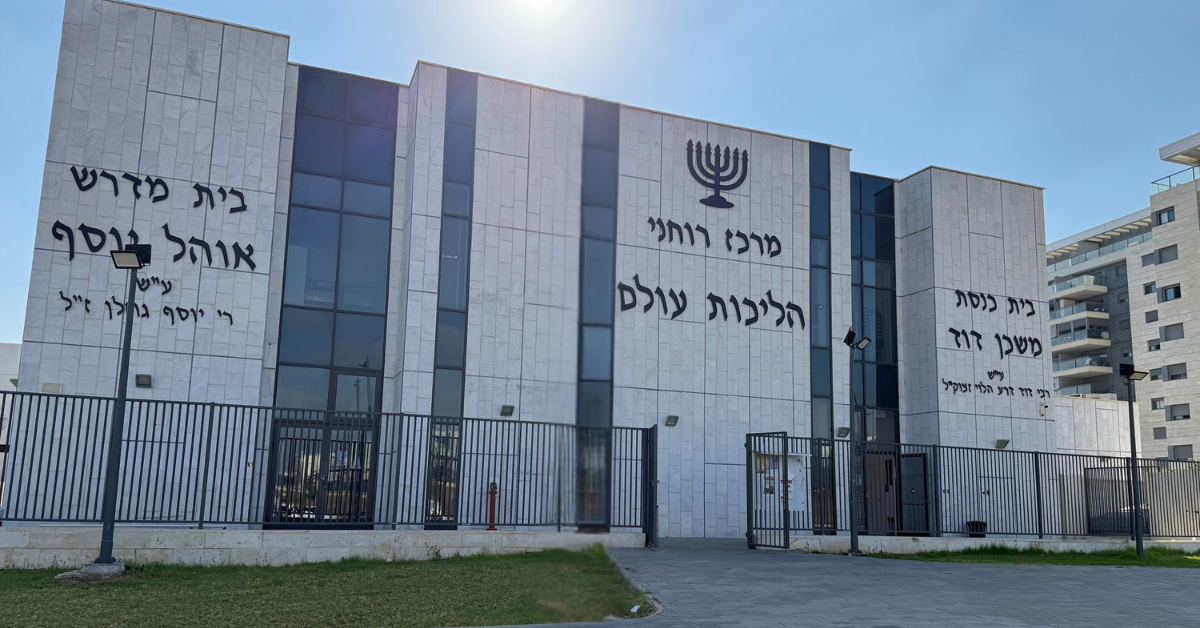
Carmei Gat has a number of active shuls representing different traditions and demographics. Currently operating in the community are Carmei Tzion, Nachalim, Yachad, Chabad and Carlibach minyan, alongside several Sephardic shuls.
The shul question is often the one that English-speaking families think about in the context of: will I find my people? The shuls in Carmei Gat are not exclusively Anglo spaces. They are Israeli shuls where English speakers are present and welcome and often actively involved, but the primary culture is Israeli. This is true across the community.
For families who want a shul that feels familiar in the way that shuls back home feel familiar, the answer is nuanced. Some of the shuls have a significant English-speaking presence and the atmosphere reflects that. Others are predominantly Israeli in culture and language. Spending a Shabbat in Carmei Gat before making a decision is the most direct way to feel this. It is the kind of thing that is difficult to communicate in text and very easy to sense in person.
What can be said clearly is that the shul community in Carmei Gat is engaged. People show up. Shabbat in a community where families walk to shul and gather afterward has a quality that is hard to manufacture, and Carmei Gat has it. The community’s Shabbat rhythm is one of the things residents mention most often when asked what they appreciate about living there.
Teenagers and social life
Families who have made this move with teenagers consistently say that the first year is hard, and that the second year is very different. The inflection point usually comes when the teenager finds their group, which in Carmei Gat tends to happen through the youth movement, through sports, or through the natural social mixing that happens in a community where families are outside and present in the way that city living often prevents. It is not effortless, but it is also not the insurmountable challenge that families sometimes fear.
On a personal note
Having made aliyah with five children, the school and community question was not abstract. It was lived, repeatedly, across different cities and different stages of the children’s education. The same questions that families moving from Tel Aviv or Jerusalem to Carmei Gat are asking today are ones that any family in transition navigates, regardless of where they are coming from.
What can be said about families considering Carmei Gat is this: the community here is genuinely engaged in absorbing new families, whether they are arriving from overseas or from the next city over. The shuls are welcoming. None of it is perfect, because no community is, but the infrastructure is real and growing, and the people are invested.
If you want to speak with families who are already doing this in Carmei Gat, families whose children are in these schools and whose teenagers are navigating this community, those introductions are easy to make. That kind of direct conversation tends to answer the questions that no guide can fully address.
Contact Deborah to learn about community updates and to be connected with families who have already made the move.